


TL;DR: Singapore vs Ireland: Who's Truly Richest in 2026?
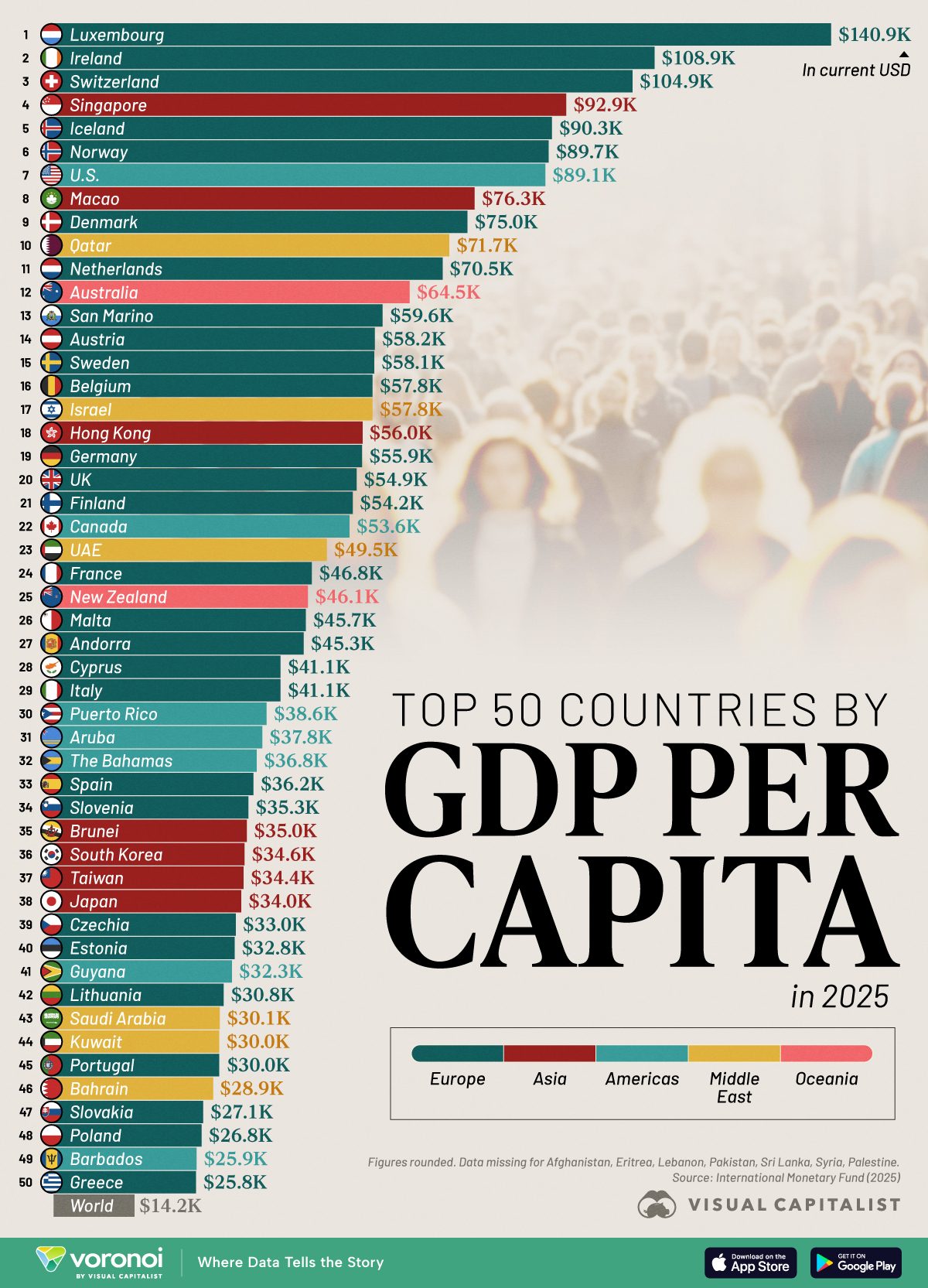
While Ireland boasts a higher GDP per capita ($135,247 vs. Singapore's $99,042 in 2026), Singapore's wealth prioritizes sustainability, economic resilience, and quality of life. Ireland's inflated GDP heavily relies on multinational tax strategies, whereas Singapore reinvests in public infrastructure, housing, and long-term value creation.
• Ireland's GNI* shows a starkly reduced figure when tax anomalies are excluded.
• Singapore excels with effective planning, housing initiatives, and a diversified economy.
• Singapore demonstrates greater resilience in economic crises; Ireland faces vulnerabilities with tax policy shifts.
To sharpen your financial planning as an entrepreneur, consider exploring startup funding opportunities in Europe or insights on leveraging economic models for startups. Each country offers valuable lessons on creating lasting impact over fleeting numbers.
Check out other fresh news that you might like:
Startup News: Key Trends, Investment Insights, and Mistakes to Avoid for European Founders in 2026
Startup News: Key Updates and Benefits of Zapier Automation Tools in 2026
Singapore vs Ireland: Which is the Richest Country in 2026?
The concept of “richness” often sparks debates, especially when comparing countries like Singapore and Ireland. On paper, the numbers might tilt in favor of Ireland due to its higher GDP per capita. But what truly defines a “rich” nation? Is it the financial metrics often reflected in global rankings, or the lived experiences of its population? As a business-savvy European entrepreneur, I see this through a dual lens: tangible wealth measured by GDP and population-wide prosperity built on infrastructure, living standards, and economic sustainability. Let’s analyze why these countries are at the top of the global wealth pyramid and what it means for decision-makers like you and me in 2026.
How Does Wealth on Paper Differ From Reality?
At first glance, Ireland leads the race with a GDP per capita projected at $135,247 in 2026, compared to Singapore’s $99,042. This statistic places Ireland as one of the wealthiest nations on the planet, according to Global Finance Magazine. Yet, if numbers are everything, why aren’t the Irish visibly wealthier than Singaporeans when you visit Dublin’s bustling streets?
Here’s the catch: Ireland’s economic figures are heavily driven by profit-shifting multinationals. Global corporations take advantage of the country’s 12.5% corporate tax rate and engage in “phantom” financial activities that inflate GDP. In reality, much of this economic activity doesn’t translate into direct welfare for its residents. To counter this, the Irish government introduced a secondary metric, GNI, which factors out these anomalies. By this standard, Ireland’s per capita wealth is significantly reduced, making the gap with Singapore less stark.
On the other hand, Singapore’s approach is more grounded. While still a hub for international corporations, the country consistently channels its economic gains back into its infrastructure, healthcare, and public services. This means its residents enjoy a higher quality of life than GDP figures alone might suggest.
Why Does Singapore’s Economic Model Stand Out?
Singapore’s policies focus on sustainability, long-term planning, and maximizing value for its citizens. Since its independence in 1965, it climbed from being a struggling city-state to one of the most sophisticated economies in the world. One cornerstone of this success is its sovereign wealth funds, Temasek and GIC, which collectively manage hundreds of billions. These funds invest globally and reinvest profits into public amenities, education, and housing initiatives.
Take public housing, for instance. Over 80% of Singaporeans live in government-subsidized flats, a program that has significantly elevated homeownership rates and provided a strong social safety net. Its infrastructure, including one of the world’s most efficient transportation systems, reflects this cyclical reinvestment strategy.
Contrast this with Ireland, which has struggled to reinvest its economic windfall into solving domestic issues like its severe housing crisis. Dublin, for example, consistently ranks as one of the most expensive cities in Europe for renters. What’s the point of a high GDP per capita if most people are rent-burdened?
How Do They Handle Economic Crises?
A country’s resilience during economic turmoil is an important aspect of wealth. Here is where Singapore has particularly excelled. During the 2008 financial crisis, its strict financial regulations and substantial sovereign reserves acted as effective buffers. Ireland, on the other hand, was severely impacted. The collapse of its property bubble led to a decade-long economic slump, compounded by massive government bailouts for its banks.
Fast forward to 2026, as global tax policies move toward a minimum corporate rate of 15%, Ireland faces new challenges. Its reliance on favorable tax policies to attract multinational corporations could become a vulnerability. In contrast, Singapore’s diversified economy and focus on regional trade partnerships allow it to maintain stability while keeping up with global economic trends.
What Lessons Can Entrepreneurs Learn?
- Long-term planning matters: Invest in infrastructure and innovation, as Singapore did, to ensure you’re not overly reliant on short-term gains.
- Diversify your income streams: Leaning too heavily on one revenue stream, be it a single product line or tax-dependent revenue, is risky, as seen with Ireland’s model.
- Focus on value creation: Building genuine value for stakeholders, customers, and employees pays off for sustainable business success. Much like Singapore invested in its people and infrastructure, entrepreneurs need to reinvest in their own “company ecosystems.”
- Prepare for downturns: Crises like the 2008 recession revealed the vulnerabilities in Ireland’s system versus Singapore’s resilience. Planning for risks and creating financial buffers is non-negotiable.
Both countries continue to evoke intrigue for their success stories. Ireland shows how a smaller country can capture global attention with attractive policies, whereas Singapore demonstrates the power of meticulous planning and reinvestment.
Which Country Wins the Wealth Battle?
In the end, the definition of “wealthiest” depends on the lens you use. By sheer GDP per capita, Ireland wins. But when assessed through the lens of sustainability, economic independence, and overall standard of living, Singapore edges ahead. The economic models these countries use hold valuable lessons for entrepreneurs seeking to build businesses that are not just profitable but resilient and impactful.
The crucial takeaway here for founders is this: wealth is more than just numbers. It’s about creating lasting value, whether that’s for your customers, your employees, or your stakeholders. Both Ireland and Singapore have navigated their own paths with differing degrees of reliance on external factors. Which path will you choose?
To explore global business opportunities, check out Silicon Canals’ detailed article for more insights.
FAQ on Singapore vs Ireland: Which is the Richest Country in 2026?
How is GDP Per Capita used to measure a country’s wealth?
GDP per capita represents the total economic output of a country divided by its population and is often cited as a key indicator of economic wealth. In 2026, Ireland leads with a projected GDP per capita of $135,247, while Singapore follows at $99,042. However, GDP per capita alone may not reflect the actual quality of life or wealth distribution. For instance, much of Ireland’s GDP is driven by multinational corporations operating within its jurisdiction, resulting in inflated figures. On the other hand, Singapore’s GDP benefits from robust infrastructure investments and economic sustainability. Explore more metrics in rich-country comparisons: Learn more about Startup News 2026.
How does Ireland’s GDP compare to its GNI* in understanding true wealth?
Ireland’s GDP includes a significant contribution from multinational corporations leveraging its favorable tax policies, a practice that inflates the actual economy. To address this distortion, Ireland uses GNI* (Gross National Income adjusted for profit shifting), which offers a more realistic picture of domestic economic activity and wealth. When adjusted for GNI*, Ireland’s apparent supremacy in GDP per capita diminishes, making its wealth comparable to that of nations like Singapore. Deep dive into European funding models.
Why is Singapore’s economic model considered sustainable?
Singapore’s recipe for economic success lies in long-term planning, effective governance, and reinvestment of wealth back into infrastructure, healthcare, and housing. Unlike Ireland, Singapore benefits from vast sovereign wealth funds like Temasek and GIC, which ensure financial stability. Over 80% of its population has access to government-subsidized housing, reflecting an equitable wealth distribution. Learn how founders can emulate Singapore’s approach through reinvesting in startups: Explore Female Founder Trends.
What challenges does Ireland face despite its high GDP?
Ireland faces a severe housing crisis coupled with high costs of living in cities like Dublin, which consistently ranks among the most expensive European cities for renters. These challenges highlight disparities in how economic prosperity is distributed among citizens. Over-reliance on multinationals also exposes Ireland to vulnerabilities from global tax reforms like the OECD’s 15% minimum corporate tax rate. Understand how to maximize sustainability in your startup policies.
Why does Singapore weather economic crises better than Ireland?
Singapore’s diversified economy, strict financial regulations, and significant reserves have allowed it to weather economic downturns, such as the 2008 financial crisis, with minimal long-term impacts. Ireland, however, suffered from a property bubble collapse during the same period, which led to large-scale bank bailouts and a prolonged economic recovery. Business leaders can strengthen resilience by evaluating economic vulnerabilities: Startup Lessons from Global Markets.
Is GDP the only metric that defines wealth in a country?
No, GDP alone offers an incomplete view of wealth. It doesn’t account for the actual living standards and social equity experienced by citizens. Singapore's reinvestment into public services ensures visibly higher quality of life and infrastructure. Ireland, with its inflated GDP due to multinational activities, often fails to translate its economic gains to equitable benefits for its residents. Want to know how founders navigate funding gaps? Check European grants to bridge funding.
What makes Singapore’s housing policies unique?
One of Singapore's standout features is its public housing model, with over 80% of citizens living in government-subsidized flats. This policy has significantly raised homeownership rates and created cohesive communities. Entrepreneurs can adapt this reinvestment principle to foster employee well-being and stakeholder satisfaction. Explore tools for female founder ecosystems.
How has tax policy played a role in Ireland’s economic narrative?
Ireland’s low corporate tax rate of 12.5% has attracted global corporations, creating an inflated GDP but also a dependency on multinational profit-shifting. This has made the country a key player in global tax debates. However, global moves toward a 15% minimum corporate tax rate risk diminishing Ireland’s attractiveness as a tax haven. Learn lessons from this in terms of economic adaptability: Global funding strategies explained.
What can founders learn from Singapore and Ireland?
Both nations provide pivotal lessons:
- Diversify income streams to avoid over-reliance on singular revenue sources (e.g., Ireland’s tax model vs. Singapore’s economic diversification).
- Value creation and reinvestment in stakeholders or employees build sustainable success, as seen in Singapore’s approach.
- Preparing financial safety nets mirrors Singapore’s response to economic downturns. The right mindset for founders.
Which country is considered “richer” in 2026?
When looking purely at GDP per capita, Ireland appears richer. When broader metrics like sustainability, quality of life, and wealth distribution are considered, Singapore’s model edges ahead. Entrepreneurs aiming to create enduring businesses should assess wealth beyond financial metrics. More insights on impactful entrepreneurship.
About the Author
Violetta Bonenkamp, also known as MeanCEO, is an experienced startup founder with an impressive educational background including an MBA and four other higher education degrees. She has over 20 years of work experience across multiple countries, including 5 years as a solopreneur and serial entrepreneur. Throughout her startup experience she has applied for multiple startup grants at the EU level, in the Netherlands and Malta, and her startups received quite a few of those. She’s been living, studying and working in many countries around the globe and her extensive multicultural experience has influenced her immensely.
Violetta is a true multiple specialist who has built expertise in Linguistics, Education, Business Management, Blockchain, Entrepreneurship, Intellectual Property, Game Design, AI, SEO, Digital Marketing, cyber security and zero code automations. Her extensive educational journey includes a Master of Arts in Linguistics and Education, an Advanced Master in Linguistics from Belgium (2006-2007), an MBA from Blekinge Institute of Technology in Sweden (2006-2008), and an Erasmus Mundus joint program European Master of Higher Education from universities in Norway, Finland, and Portugal (2009).
She is the founder of Fe/male Switch, a startup game that encourages women to enter STEM fields, and also leads CADChain, and multiple other projects like the Directory of 1,000 Startup Cities with a proprietary MeanCEO Index that ranks cities for female entrepreneurs. Violetta created the “gamepreneurship” methodology, which forms the scientific basis of her startup game. She also builds a lot of SEO tools for startups. Her achievements include being named one of the top 100 women in Europe by EU Startups in 2022 and being nominated for Impact Person of the year at the Dutch Blockchain Week. She is an author with Sifted and a speaker at different Universities. Recently she published a book on Startup Idea Validation the right way: from zero to first customers and beyond, launched a Directory of 1,500+ websites for startups to list themselves in order to gain traction and build backlinks and is building MELA AI to help local restaurants in Malta get more visibility online.
For the past several years Violetta has been living between the Netherlands and Malta, while also regularly traveling to different destinations around the globe, usually due to her entrepreneurial activities. This has led her to start writing about different locations and amenities from the point of view of an entrepreneur. Here’s her recent article about the best hotels in Italy to work from.