
TL;DR: Iranian Internet Blackout Paralyzes Business Amid Economic Crisis
In January 2026, Iran experienced a nationwide internet blackout during massive protests caused by a severe economic crisis. The government-imposed shutdown isolated Iran digitally, preventing communication and halting business operations dependent on online platforms.
• Businesses relying on e-commerce, banking, and digital communications were particularly devastated.
• The blackout hindered international trade and disrupted startup ecosystems.
• Entrepreneurs globally should see this as a reminder to prepare for uncertainties and bolster digital and economic resilience.
Adopt contingency plans and diversify revenue channels to shield against such risks. For part of your resilience strategy, explore top platforms that support global connectivity and innovation, like AI Powered Tools.
Check out other fresh news that you might like:
AI & Startup News: 2026 Guide on How LLMs Handle JavaScript & SEO Mistakes to Avoid
Startup News: Steps and Lessons from Accenture’s Acquisition of Faculty in 2026
Startup News: Key Updates and Benefits of Zapier Automation Tools in 2026
Startup News: 7 Reasons Why Understanding Privilege in 2026 Can Benefit Entrepreneurs
Internet Collapses in Iran Amid Protests Over Economic Crisis
As an entrepreneur who has navigated volatile global markets and geopolitical uncertainties during my career, I’m always tracking how shifts in the social and economic landscape can silently, yet significantly, shape the entrepreneurial ecosystem. What happened in Iran in January 2026 serves as a stark reminder of how fragile the digital infrastructure has become in the face of political and economic crises, and why we, as business leaders, need to prepare for such uncertainties, no matter where we are based.
In early 2026, a full-scale internet blackout swept across Iran amidst escalating protests over an economic collapse. This decision by the government not only isolated the country from the global digital sphere but also stifled the already limited channels of communication for its citizens. Internet shutdowns as a governmental control device are not new, yet the scale and extent of Iran’s blackout signal a new low. For business owners and entrepreneurs, especially those in industries relying heavily on digital connectivity, the implications of such events are not something to overlook.
What Led to the Internet Blackout in Iran?
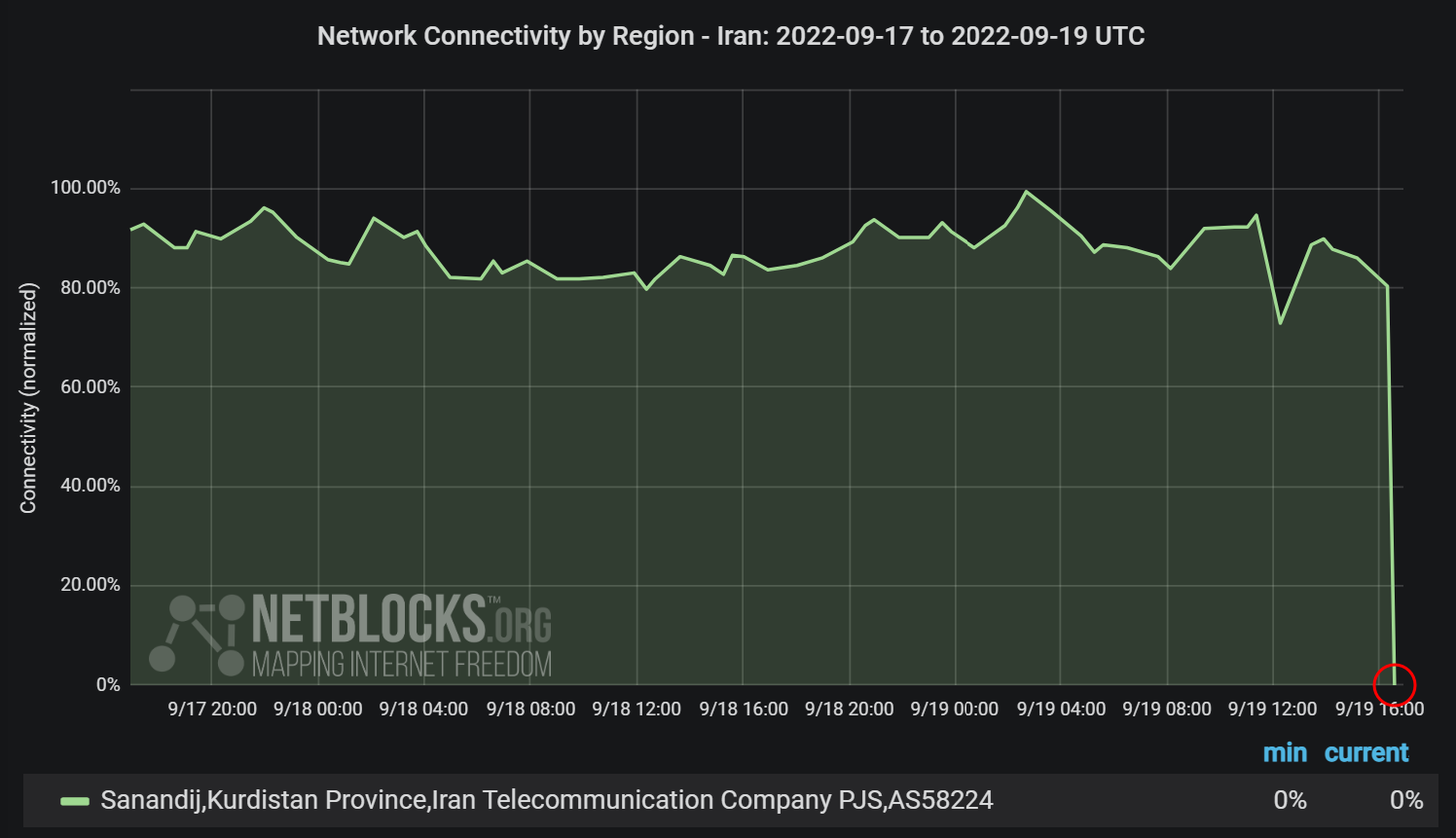
The protests erupting at the end of December 2025 were rooted in Iran’s deteriorating economic conditions. The Iranian currency, the rial, plunged dramatically, sparking shortages of essential goods and skyrocketing inflation. Widespread frustration and unrest culminated in major cities, with the Grand Bazaar in Tehran becoming a symbolic center of dissent as shopkeepers shuttered their doors for over a week. Despite the mounting societal pressure, authorities responded with violent force and, ultimately, a near-total disruption of internet connectivity starting January 8, 2026.
Organizations such as NetBlocks, Cloudflare, and Kentik revealed data showing that internet traffic in Iran dropped sharply, resulting in “near-total disconnection.” This intentional blackout not only prevented protesters from organizing but also hampered media outlets and international organizations from accurately reporting on the events. Amir Rashidi, an Iranian cybersecurity expert, described the situation as the country being “cut off from the outside world.”
How Do Internet Blackouts Impact Entrepreneurs and Startups?
For Iranian entrepreneurs and businesses, the blackout has likely created an existential crisis. Many businesses today rely on internet-driven platforms for communication, payments, marketing, and operations. When the banking system can’t function or e-commerce platforms become inaccessible, businesses may not survive such disruptions, especially in fiercely competitive markets. Beyond Iran, the rest of the entrepreneurial world should take this as a severe cautionary tale. Whether based in Iran, Europe, or elsewhere, founders must understand the ripple effects of such a sudden cut from the global marketplace.
- Businesses lose the ability to operate online or communicate with suppliers and customers.
- International trade grinds to a halt due to disconnected lines of digital communication.
- Team coordination suffers, especially for startups running cross-border operations.
- Fulfillment of orders, client communications, and promotional campaigns cease abruptly.
Preparing for the Worst: Lessons for Entrepreneurs
Let’s face it, while not all regions experience censorship or government-mandated blackouts, the dependency of nearly all modern businesses on digital infrastructure makes this an important topic to strategize about. Entrepreneurs must take proactive steps to ensure that their businesses are resilient in the face of unexpected digital or economic disruptions. Here are strategies to avoid complete collapse:
- Establish a contingency communication plan: Create alternative channels, like SMS alerts or satellite communication, to ensure you can still connect with team members and customers during outages.
- Back up critical data: Have regular, off-site backups ensuring critical business information isn’t linked solely to internet-based tools.
- Diversify revenue streams: Relying on one revenue channel, especially one dependent on internet availability, can be risky. Consider offering offline services if applicable.
- Monitor region-specific risks: Entrepreneurs operating in high-risk regions should collaborate with analysts or cybersecurity experts to monitor human rights or economic stability indexes.
- Build an international safety net: Form partnerships or leverage tools and platforms that are based in regions with minimal risk of disruption, ensuring continuity of business operations.
Could European Startups Also Be at Risk?
As a European entrepreneur, it might be tempting to dismiss scenarios like this as restricted to politically unstable regions. But even for those of us operating in highly regulated markets, the interconnected nature of digitized global trade means such events could have immediate knock-on effects. If not directly, disruptions elsewhere in the supply chain could still ripple their consequences towards us. Businesses importing electronics or other goods from impacted nations, for instance, could face delays or increased costs.
Moreover, Europe is not immune to digital risks. Cybersecurity experts, for instance, continue to warn about cyber-attacks targeting infrastructure or geopolitical crises that could target utilities or digital networks. As a serial entrepreneur, I make sure I have mechanisms in place to work offline should digital tools or access become temporarily unavailable.
The Takeaway: Learn from Iran’s Blackout
Whether you’re an entrepreneur working in a politically tense landscape or in a historically stable one, the Iranian internet blackout is a wake-up call. An over-reliance on internet access and digital tools without sufficient contingency planning can threaten everything you’ve worked hard to build. Resilience, after all, isn’t just a buzzword, it’s about anticipating real threats and building systems that survive under pressure. As we look ahead, founders have no choice but to create adaptive frameworks that can thrive, even in the most unpredictable conditions.
At the same time, whether affected directly or not, this global event highlights the need for solidarity. Entrepreneurs like you and me are better positioned than ever to create awareness of these issues, champion open access to communication technologies, and push for equitable opportunities across borders. There’s strength in community, not isolation.
Now, let’s rethink global digital dependence, and as always, keep our businesses ready to adapt. It’s essential, because the future waits for no one.
FAQ on Internet Blackouts in Iran Amid Economic Crisis
What triggered the protests in Iran leading to the internet blackout?
The protests were sparked by economic pressures, including soaring inflation, shortages of essential goods, and the dramatic fall of the Iranian rial. Frustration culminated in widespread public demonstrations that began in December 2025, primarily in Tehran's Grand Bazaar and later expanded nationwide. Authorities implemented a near-total internet blackout on January 8, 2026, as part of their efforts to suppress dissent and control communication. Explore Iran protest background | Understand economic impacts
How does the Iranian government use internet shutdowns during protests?
The Iranian government historically utilizes internet blackouts as a control tool during periods of unrest, effectively cutting off communication to prevent the organization of protests and limit the perception of events outside the country. These shutdowns restrict citizen access to social media and disrupt services critical for daily activities, including banking and e-commerce. For instance, during the January 2026 blackout, global tracking firms observed a "near-total disconnection." Learn more about NetBlocks data
How are internet blackouts impacting businesses in Iran?
A widespread internet blackout severely affects businesses relying on digital platforms for services like communication, marketing, payments, and coordination. E-commerce, international trade, and cross-border operations are completely halted, leading to significant revenue losses. Entrepreneurs worldwide should take Iran’s recent blackout as a warning to develop contingency plans for unexpected disruptions. Explore business lessons
What can startups globally learn from Iran's internet blackout?
The blackout highlights the need for resilient strategies, including data backups, diversified revenue channels, and contingency plans for communications. Entrepreneurs in high-risk regions should supply chain diversification and satellite communication systems to mitigate risks. Discover startup resilience strategies
Are European startups also at risk from sudden blackouts?
While Europe generally has stable political landscapes, cyber-attacks and infrastructure vulnerabilities can still lead to temporary outages. Entrepreneurs importing goods or materials from regions like Iran should prepare for disruptions by diversifying suppliers or adopting offline workflows. Understand risks facing European startups
How do governmental internet blackouts affect global awareness of crises?
Blackouts limit journalists' access and hinder international organizations’ ability to monitor and document human rights abuses or societal unrest. Iran’s January 2026 blackout illustrates how such measures work to obstruct exposure of government crackdowns. Explore global implications
How can entrepreneurs mitigate the risks of digital dependence?
Entrepreneurs should explore alternatives to internet-reliant tools, such as offline methods of communication and hybrid operational models. Forming partnerships in regions less susceptible to disruptions ensures continuity. Find actionable insights
What role do global monitoring organizations play during internet blackouts?
Organizations such as NetBlocks, Cloudflare, and Kentik play a critical role by tracking connectivity data, allowing global awareness of events in blackout-affected areas. Their monitoring ensures accountability in regions with restricted journalism. Follow NetBlocks updates
Can geopolitical conflicts lead to internet disruptions even outside politically unstable countries?
Yes, geopolitics increasingly impact global supply chains. For example, shutdowns like Iran’s can delay electronics imports or disrupt oil shipments, affecting global markets. European businesses relying on Middle Eastern resources must be prepared for ripple effects. Learn about geopolitical influences
What strategies should female founders use to navigate crises like internet blackouts?
Female founders should adopt robust planning frameworks, focusing on human-centered team building and digital adaptability. Leveraging local and international support networks is vital to thrive during uncertain situations. Master essential founder skills
About the Author
Violetta Bonenkamp, also known as MeanCEO, is an experienced startup founder with an impressive educational background including an MBA and four other higher education degrees. She has over 20 years of work experience across multiple countries, including 5 years as a solopreneur and serial entrepreneur. Throughout her startup experience she has applied for multiple startup grants at the EU level, in the Netherlands and Malta, and her startups received quite a few of those. She’s been living, studying and working in many countries around the globe and her extensive multicultural experience has influenced her immensely.
Violetta is a true multiple specialist who has built expertise in Linguistics, Education, Business Management, Blockchain, Entrepreneurship, Intellectual Property, Game Design, AI, SEO, Digital Marketing, cyber security and zero code automations. Her extensive educational journey includes a Master of Arts in Linguistics and Education, an Advanced Master in Linguistics from Belgium (2006-2007), an MBA from Blekinge Institute of Technology in Sweden (2006-2008), and an Erasmus Mundus joint program European Master of Higher Education from universities in Norway, Finland, and Portugal (2009).
She is the founder of Fe/male Switch, a startup game that encourages women to enter STEM fields, and also leads CADChain, and multiple other projects like the Directory of 1,000 Startup Cities with a proprietary MeanCEO Index that ranks cities for female entrepreneurs. Violetta created the “gamepreneurship” methodology, which forms the scientific basis of her startup game. She also builds a lot of SEO tools for startups. Her achievements include being named one of the top 100 women in Europe by EU Startups in 2022 and being nominated for Impact Person of the year at the Dutch Blockchain Week. She is an author with Sifted and a speaker at different Universities. Recently she published a book on Startup Idea Validation the right way: from zero to first customers and beyond, launched a Directory of 1,500+ websites for startups to list themselves in order to gain traction and build backlinks and is building MELA AI to help local restaurants in Malta get more visibility online.
For the past several years Violetta has been living between the Netherlands and Malta, while also regularly traveling to different destinations around the globe, usually due to her entrepreneurial activities. This has led her to start writing about different locations and amenities from the point of view of an entrepreneur. Here’s her recent article about the best hotels in Italy to work from.