
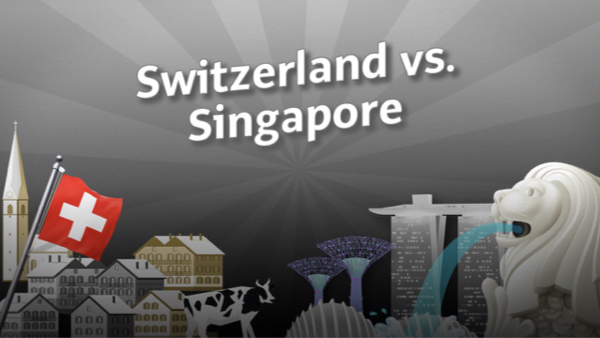
TL;DR: Singapore vs Switzerland: Economic Powerhouses Compete for 2026's Richest Nation Title
By 2026, Switzerland and Singapore, two small but mighty economies, stand out as potential leaders in global wealth. Switzerland holds the edge in nominal GDP per capita ($118,173), driven by strong industries like banking and pharmaceuticals. Meanwhile, Singapore tops in purchasing power parity (PPP) with $157,000, leveraging its innovative policies and status as a global financial hub.
• Switzerland prioritizes stability: Resilient traditional industries like luxury goods and watchmaking sustain its economy.
• Singapore thrives on agility: Attracting multinationals and excelling as a trade gateway, it embodies rapid, innovation-focused growth.
• Lessons for entrepreneurs: Choose between stability or adaptability, invest in workforce development, and learn to mitigate external risks.
If you aim to blend resilience with innovation in your business strategy, understanding product validation processes can guide your journey to long-term success.
Check out other fresh news that you might like:
Startup News: Key Trends, Investment Insights, and Mistakes to Avoid for European Founders in 2026
Startup News: Key Updates and Benefits of Zapier Automation Tools in 2026
Singapore vs Switzerland: Which Is the Richest Country in 2026?
As the global economy reshapes itself, the competition among the world’s wealthiest nations becomes a compelling narrative. Singapore and Switzerland, two small yet economically powerful nations, intrigue observers and economists alike in their quest for prosperity. But who takes the crown as the richest in 2026? From contrasting economic models to distinct paths to wealth, this article dives into the numbers, the policies, and the undeniable lessons these nations offer.
I’ve been fortunate to run businesses across Europe and Asia, granting me a front-row seat to these fascinating economies. What we’re about to explore isn’t merely about wealth rankings, it’s about understanding how nations build and maintain economic stability while overcoming adversity. Let’s assess how Singapore and Switzerland stack up against each other, and how entrepreneurs can draw insights from their success stories.
Which Country Leads in GDP Per Capita?
In 2026, GDP per capita serves as the central yardstick for evaluating wealth. Switzerland leads in nominal terms, boasting $118,173 per capita, a figure stemming from its well-established industries like pharmaceuticals and banking. Meanwhile, Singapore claims first place globally in purchasing power parity (PPP) terms with $157,000 per capita due to its status as a financial hub and trade gateway.
- Switzerland (Nominal GDP per Capita): $118,173
- Singapore (PPP Per Capita): $157,000
What’s the takeaway? These metrics highlight Switzerland’s focus on deep-rooted industries, compared to Singapore’s fast-paced, service-based model that thrives on adaptability and foreign investments. For entrepreneurs, this is an important distinction when choosing between long-term and rapid growth strategies in business.
What Drives Their Economic Success?
Your business isn’t just about the product but the infrastructure supporting it. Similarly, each nation’s economic success hinges on key drivers.
- Switzerland: Known for wealth creation rooted in centuries-old banking secrecy, resilient industries like luxury goods, pharmaceuticals, and watchmaking are foundational.
- Singapore: Emerging from its 1965 independence, Singapore built wealth through attracting multinationals, trading dominance, and advanced urban planning such as Changi Airport and Marina Bay Sands enhancing its global appeal.
The versatility of Singapore’s young economy and the steadiness of Switzerland’s traditional system illustrate two divergent paths to success. Entrepreneurs can strategize by either introducing innovation quickly or developing lasting value.
What Risks Do They Face?
Every kingdom faces potential downfall, and understanding risks is vital for sustainability. Switzerland’s reliance on banking secrecy historically attracted criticism post-2008 global recession. Now with stricter transparency, their banking dominance is somewhat diminished. On the other hand, Singapore’s innovative policies and dependence on continued capital inflows make it vulnerable to unforeseen geopolitical or financial events.
- Switzerland: Less competitive with some nations after losing full banking secrecy.
- Singapore: Risk of attracting “phantom” foreign investments, which can rapidly decline amid global turbulence.
Entrepreneurs should always prepare for external risks. Stability might work for some business models, but agility allows others to outpace challenges, a balance is crucial.
Key Lessons for Entrepreneurs
- Stability or Agility? Switzerland teaches the value of resilience and longevity, while Singapore underscores competitiveness and innovation.
- Policy & Leadership Matter. Clear economic planning can drastically change outcomes. Singapore’s tax-friendly approach attracts multinationals globally.
- Workforce Development. Both nations showcase how education systems build critical skills for sustainable growth and prosperity.
- Building Trust. Swiss banking is synonymous with discretion, proving that trust can build an empire over time.
Not every business strategy requires immediate results, some may require years of consistency like Switzerland, while others thrive on disruptive innovation akin to Singapore.
How Can Entrepreneurs Apply These Insights?
Here’s a strategic checklist for business owners inspired by Switzerland and Singapore:
- Determine your long-term vs. short-term growth strategy. Is stability your goal or adaptability?
- Build systems for trust, transparency, and leadership alignment with your audience.
- Invest in employee development. Models like Swiss apprenticeships or Singapore’s focus on globalized skill sets showcase the merits of investing in talent.
- Prepare for external risks. Develop contingency plans for sudden disruptions.
- Analyze business R&D opportunities. Like Switzerland, it pays in the long run.
The rivalry between Singapore and Switzerland is more complex than numbers on a spreadsheet, it’s a powerful lesson in perseverance, strategy, adaptability, and leadership.
Whether you’re thinking of building a business that’ll last generations or planning to scale rapidly, the economic models of these nations offer frameworks you can adapt to your priorities. As you grow, remember to balance trust, innovation, and resilience.
FAQ on Singapore vs Switzerland's Economic Wealth in 2026
What are the key factors in determining the richest country in 2026?
Richness is often gauged by GDP per capita, either in nominal terms or adjusted for purchasing power parity (PPP). In 2026, Singapore leads in PPP terms with $157,000 per capita due to its efficient financial ecosystem and global trade dominance. Switzerland, on the other hand, excels in nominal GDP per capita at $118,173, leveraging its traditional industries like pharmaceuticals, luxury goods, and banking. Each metric highlights different aspects of wealth, Singapore's global integration and agility versus Switzerland's reliance on resilient, legacy industries. Learn more about global economic success factors.
How has Switzerland sustained its status as a wealthy nation?
Switzerland's economic model is strongly rooted in stability and trust. Historically, its neutrality allowed the development of confidential banking, luxury watchmaking, and a robust pharmaceutical sector. Its effective utilization of natural landscapes and tourism adds an extra layer of resilience. However, recent years saw a reduction in the allure of Swiss banking secrecy after global mandates on tax transparency. Switzerland adapts by focusing on education, innovation in luxury markets, and sustainable development. Explore Switzerland's resilience strategies.
How has Singapore's economic model transformed since its independence?
Singapore's journey from a struggling nation in 1965 to a financial powerhouse is remarkable. Its economic transformation is rooted in strategic policies, such as incentivizing multinational corporations, investing in top-tier education systems, and leveraging geographic location as a trade hub. Anchored in adaptability, Singapore consistently diversifies through fintech, AI, and other tech-driven ventures. Such diversification ensures it retains its leading position in purchasing power parity rankings. Read about Singapore’s startup revolution.
What lessons can entrepreneurs learn from Singapore's adaptability?
Entrepreneurs can emulate Singapore’s adaptability by embracing innovation and leveraging competitive advantages. Singapore’s rise is credited to its focus on foreign direct investment, infrastructure modernization, and remaining a first-mover in global connectivity sectors. Similarly, founders should aim to disrupt traditional markets by integrating tech solutions that align with future trends. Discover how to scale with agility.
Why is Switzerland's GDP growth considered traditionally stable?
Switzerland maintains steady GDP growth due to its defensive economic policies, focused industries, and historically neutral trade stances. Given its entrenched financial laws and advanced R&D, many organizations find this Alpine nation a regional economic hub. However, greater scrutiny on banking practices post-2008 diminished growth slightly. Even with these challenges, Switzerland continues emphasizing trust-heavy sectors such as banking and luxury goods, avoiding over-reliance on international trends.
What risks do Singapore and Switzerland face in 2026?
While formidable, both nations face unique vulnerabilities. Singapore risks over-reliance on global foreign capital inflows and potential financial disruptions due to geopolitical instability. Switzerland faces challenges in maintaining banking leadership after regulatory changes. For entrepreneurs, these risks serve as lessons in the importance of balancing agility with structural safeguards. Understand business risk strategies.
How should founders emulate Switzerland’s resilience?
Swiss resilience demonstrates the value of focusing on long-term strategy, deep-rooted trustworthiness, and self-sustaining systems. Entrepreneurs should prioritize quality and measured growth, even if it implies slow scaling initially. For example, developing products tied intrinsically to their expertise and building sustainable partnerships secures longevity in the market. Master entrepreneurial sustainability.
Do GDP rankings truly reflect living standards?
Not entirely. While GDP per capita highlights economic capability, factors like wealth distribution, social equality, and systemic vulnerabilities also shape living standards. For instance, Singapore outranks Switzerland in PPP but faces higher inequality risks; the reverse applies for nominal GDP ranks and community cohesion in Switzerland. Learn more about measuring wealth standards.
Which sectors contribute most to Singapore's economic wealth?
Singapore’s primary economic drivers include financial services, global trade, and technology innovation. Sectors such as AI, renewable energy, and smart-city technology have increasingly played significant roles. Real estate developments like Marina Bay Sands and Changi Airport enhance tourism contributions that augment national prestige significantly.
Why is GDP growth important for female founders?
Whether launching in Singapore, Switzerland, or elsewhere, GDP dynamics provide founders insights into regional opportunities and economic stability. Higher GDP per capita often correlates strongly with access to capital, education systems, and scalable professional networks, key elements for startup success. Start your startup journey here.
About the Author
Violetta Bonenkamp, also known as MeanCEO, is an experienced startup founder with an impressive educational background including an MBA and four other higher education degrees. She has over 20 years of work experience across multiple countries, including 5 years as a solopreneur and serial entrepreneur. Throughout her startup experience she has applied for multiple startup grants at the EU level, in the Netherlands and Malta, and her startups received quite a few of those. She’s been living, studying and working in many countries around the globe and her extensive multicultural experience has influenced her immensely.
Violetta is a true multiple specialist who has built expertise in Linguistics, Education, Business Management, Blockchain, Entrepreneurship, Intellectual Property, Game Design, AI, SEO, Digital Marketing, cyber security and zero code automations. Her extensive educational journey includes a Master of Arts in Linguistics and Education, an Advanced Master in Linguistics from Belgium (2006-2007), an MBA from Blekinge Institute of Technology in Sweden (2006-2008), and an Erasmus Mundus joint program European Master of Higher Education from universities in Norway, Finland, and Portugal (2009).
She is the founder of Fe/male Switch, a startup game that encourages women to enter STEM fields, and also leads CADChain, and multiple other projects like the Directory of 1,000 Startup Cities with a proprietary MeanCEO Index that ranks cities for female entrepreneurs. Violetta created the “gamepreneurship” methodology, which forms the scientific basis of her startup game. She also builds a lot of SEO tools for startups. Her achievements include being named one of the top 100 women in Europe by EU Startups in 2022 and being nominated for Impact Person of the year at the Dutch Blockchain Week. She is an author with Sifted and a speaker at different Universities. Recently she published a book on Startup Idea Validation the right way: from zero to first customers and beyond, launched a Directory of 1,500+ websites for startups to list themselves in order to gain traction and build backlinks and is building MELA AI to help local restaurants in Malta get more visibility online.
For the past several years Violetta has been living between the Netherlands and Malta, while also regularly traveling to different destinations around the globe, usually due to her entrepreneurial activities. This has led her to start writing about different locations and amenities from the point of view of an entrepreneur. Here’s her recent article about the best hotels in Italy to work from.